
What can you do to increase the uptake of the Healthy Start scheme?

What is Healthy Start?
NHS Healthy Start is the UK’s food welfare scheme for pregnant women and young children in low-income families. The scheme is there to help families who are most in need of this support. Families will get help to buy healthy food and drink including fresh, frozen and tinned fruit and vegetables, fresh, dried and tinned pulses and infant formula milk (stage 1). Families will also be able to access free Healthy Start vitamins.
You play a key role in sharing information on the NHS Healthy Start with the families you work with. Research shows that women who are introduced to the scheme by a health professional, who takes the time to explain its public health context and health benefits, are more likely to understand the benefits and make better use of the scheme.

Why is NHS Healthy Start essential for the families you work with?
Families from lower social economic backgrounds may face health inequalities resulting in poor health outcomes. It is estimated 8.4 million people in the UK struggle to get enough to eat. This includes many households with people in work, families with children, as well as older, disabled and Black, Asian and minority ethnic (BAME) people.
The rising cost of living is particularly worrying for infants and young children living in the most deprived households in England. Recent figures, February 2026 (opens in new tab) show that 15.3% of households with children reported experiencing food insecurity compared with 10.9% of households without children.
NHS Healthy Start provides a basic nutritional safety net to encourage families to make healthy food choices. Unfortunately, many families miss out on this important support.
In the UK, our National Diet and Nutrition Survey (NDNS) assesses the diet, nutrient intake and nutritional status of the general population aged 1.5 years and above. The most recent report (2019) reviews the results from the 2008/09-2016/17 surveys highlighting the need to improve nutritional status of young children.
What do the results tell us?
- There is a reduced intake of most vitamins and minerals
- Both females and males of all ages showed a significant reduction in vitamin A and folate
- 19% of children aged 4 to 10 years, 37% aged 11 to 18 years and 29% of adults are not achieving their vitamin D requirements. You can find out more about Vitamin D requirements for Infants and Toddlers here (opens in new tab)!
How to Apply
Applying Online – Families Can Apply Online if:
- they are more than 10 weeks pregnant or have at least one child under 4 years old
- the families monthly ‘take-home pay’ (also called ‘earned income’) is £408 or less from employment
Form to Apply Online To Share with Families (Opens in New Tab)
Universal Credit Claimants
The details families use to apply for Healthy Start must match the details on their Universal Credit claim. Families can go to their Universal Credit account (opens in a new tab) to check:
- their address details, including their postcode
- all of their children are named and verified on their Universal Credit claim
To apply online, families will need their:
- name
- address
- date of birth
- National Insurance number
- baby’s due date (if pregnant)
- benefit award letter if over 18 – make sure to enter the exact details shown on the benefit award letter
Families should make sure that their details are up to date with the Department for Work and Pensions (DWP) and may wish to contact them to check or update their details before applying.
Form to Apply Online To Share with Families (Opens in New Tab)
Applying By Email Or Phone- Families Can Apply if:
- they are more than 10 weeks pregnant, or have at least one child under 4 years old, and get Pension Credit (which includes the child addition).
- they are more than 10 weeks pregnant and under 18 years old, and not getting any benefits.
Signpost families to apply by either:
- emailing healthy.start@nhsbsa.nhs.uk
- calling 0300 330 7010
Phone lines are open 8am to 6pm Monday to Friday (except public holidays). You can signpost families to find out about call charges (opens in a new tab).
Families can find more information about applying online or via phone or email (opens in new tab)
NHS Healthy Start for families who are not British citizens but their child is:
Families might be eligible for NHS Healthy Start depending on their immigration status. They qualify if the following are true:
- families have at least 1 British child under 4 years old
- families earns £408 or less per month after tax
- families cannot claim ‘public funds’ (opens in a new tab) (for example, benefits) – either because of their immigration status or because they do not have an immigration status.
Families biometric residence permit (BRP) or their online immigration status (opens in a new tab) will say if they cannot claim public funds. Families might also have a letter from the Home Office about it.
To apply for NHS Healthy Start, families can ask for an application form via email. Only use this email address if families think they cannot claim public funds because of their immigration status- healthystartNRPF@nhsbsa.nhs.uk
What do Families Receive?
Healthy Start can help families with their weekly food shop budget, as they’ll receive:
- NHS Healthy Start Card to buy certain foods and milk
- NHS Healthy Start Vitamins.
Access to food and vitamins will support families to eat more fruits, vegetables and pulses and to meet the recommendations for Vitamin D.
The Application Process
- Families can apply to the NHS Healthy Start scheme online at www.healthystart.nhs.uk (opens in new tab)
- If someone cannot apply online, they can apply over the telephone by calling the NHS Healthy Start helpline on 0300 330 7010.
- A telephone translation service is also available when calling the helpline.
- The NHS Healthy Start helpline is available Monday to Friday from 8am to 6pm.
- The online application process enables someone to apply on the applicant’s behalf. The claimant must be present during the application process to confirm their personal information and accept the prepaid card terms and conditions.
- Beneficiaries can contact the automated service on 0118 338 5810 to activate their card, check their balance, get their PIN or report a card as lost or stolen. This line is available 24 hours a day, seven days a week.
Please note: While most families can apply online for NHS Healthy Start, applicants who receive a legacy benefit and those who are under 18 and not on a passporting benefit currently need to apply using a paper application form. This is a new application form for the NHS Healthy Start scheme and is different to the form used for the old paper voucher scheme. If you work with families who can’t currently apply online, please signpost them to the NHS Healthy Start helpline so they can be provided with the appropriate form by emailing healthy.start@nhsbsa.nhs.uk or calling 0300 330 7010.
What will families receive?
Families who qualify for Healthy Start will receive money added onto their card every 4 weeks to spend on certain food and milk. Families can also use their card to get free Healthy Start vitamin supplements.
Food and Drink
They will get:
- £4.65 each week of your pregnancy (from the 10th week of your pregnancy)
- £9.30 each week for children from birth to 1 year old
- £4.65 each week for children between 1 and 4 years old
which they can use in local shops to buy (they must display a Mastercard symbol):
- plain cow’s milk – whole, semi-skimmed or skimmed. It can be pasteurised, sterilised, long life or UHT. (This does not include milk which has had chemicals, vitamins, flavours or colours added or removed)
- fruit and vegetable– plain fresh, frozen or tinned (fruit and vegetables with no added ingredients), whole or chopped, packaged or loose
- pulses – fresh, dried, tinned pulses, including but not limited to lentils, beans, peas and chickpeas but not those to which fat, salt, sugar or flavouring have been added
- infant formula milk that is based on cow’s milk and can be used from birth (stage one)

Here are some example of what families can buy using the vouchers they receive for under 1’s and over 1’s:

Healthy Start Vitamins
Families can also use their card to get free vitamin supplements. Vitamins can be collected every eight weeks from a registered distributor. To collect their free Healthy Start vitamins, beneficiaries in England and Wales will need to present their NHS Healthy Start prepaid card as evidence of their entitlement. No payment is taken from the card.
The NHS Healthy Start vitamins are tablets for women and drops for children. Pregnant women, women with a baby under one year old and children aged up to their fourth birth will receive Healthy Start vitamins.
- Healthy Start women’s vitamin tablets contain Folic acid, vitamin C, vitamin D (70 milligrams of vitamin C, 10 micrograms of vitamin d, 400 micrograms of folic acid).
- Healthy Start children’s vitamin drops contain vitamin A, vitamin C and vitamin D (233 micrograms of vitamin A, 20 milligrams for vitamin C, 10 micrograms of vitamin D3).
You can find out more information on children’s Vitamin D requirements in our blog Vitamin D recommendations for Infants and Toddlers (opens in new tab).

Where can the NHS Healthy Start Card be used?
Parents and carers receiving NHS Healthy Start card should be offered information on how to use them to increase the amount of fruit and vegetables in their family’s diet. The Healthy Start website details local retailers that accept the Healthy Start card (they must display a Mastercard symbol), based on the families address. For more information click on this link to be able to see some frequently asked questions (opens in new tab).
- At local shops and greengrocers
- Supermarkets
- Corner shops
- Food co-ops
- Market stalls
- Milk floats or vans
- Pharmacies
Families can use their card to get Healthy Start Vitamin which are distributed through primary care trusts (opens in new tab). Vitamins are suitable for vegetarians and free from wheat, fish, egg, salt. No colours, flavours or preservatives are used and they do not contain gluten.
Can the card part pay for a food shop?
The paper vouchers could be used to part pay for a larger food shop. Unfortunately, the pre-paid cards do not yet offer this same simplicity. Instead, users must separate out their Healthy Start items from their wider shop and pay for them separately with the card.
On First Using the Healthy Start Card
Families will need to activate their card before first using it in a shop. They will need to contact the Healthy Start team (opens in new tab) and will need to have their card, date of birth, client ID (located at the top of the letter that came with the card). Families will receive the card PIN two days after the card is sent to families.
Tips on Activating the card:
Users can activate their card calling 0300 330 2090, pressing 1 and going through the automated service which should take no more than a few minutes. On this number families can also check their balance or report their card as missing or stolen.
If families want to talk to an advisor or an intepreter call 0300 330 7010.
It’s worth knowing that these numbers are included free of charge in some pay plans, but not all. If it’s not included in yours or you’re not on a pay plan you could be charged between 3 – 55p a minute from a mobile (opens in new tab).
Universal Free Healthy Start Vitamins
In some areas, Healthy Start vitamins are free to all families – contact local health visiting teams to find out if they’re free where you live. For example the London Borough of Newham provides free universal vitamins.
London Borough of Newham Universal Free Healthy Start Vitamin scheme?
All families with children under the age of 4, pregnant and breastfeeding mums in Newham are entitled to the free vitamins.
Who are the distributing partners in Newham?
- Children’s Centres
You can find details for Newham’s Children’s Centres here (opens in new tab)! Families who have not yet registered for the Healthy Start scheme that may be eligible for help to buy certain milk and food, please continue to promote this and direct families to the Healthy Start website (opens in new tab) to complete the online application.
You can download posters to display in your setting here Healthy Start Flyer A5 (PDF, 136KB) and Healthy Start Poster A3 (PDF, 155KB)
Supporting Families to Buy Food and Drink using their card
There are lots of ways you can support families to use their Healthy Start card and prepare healthy meals. Let’s consider some of the resources available to you and your setting that will help to inspire families to get cooking:
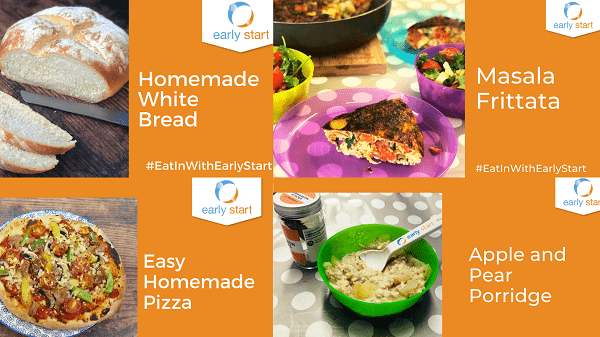
Eat In With Early Start Recipe Videos
Share our ‘Eat in with Early Start’ recipe videos with families and highlight how simple they are to prepare and how cost effective they are.
Eat in with Early Start Recipe Videos (opens in new tab)
Best Start In Life and Better Health Healthier Family Recipes
Start for Life and Better Health have a number of fun, simple and cost effective recipes for the whole family. The provide ideas and inspiration for tasty, healthy recipe with easy to follow instructions, and a shopping list of all the ingredients needed.
Better Health Healthier Families Website (opens in new tab)
Best Start in Life Website (opens in new tab)
Cook Together Better Health (opens in new tab)
Eat Smart Shop Smart
We have a number of blogs to support families including:
- How to Reduce Food Waste (opens in new tab) we discuss our top tips for making the most of store cupboard ingredients with top tips for reducing food waste!
- How to Feed your Family on a Budget (opens in new tab) we discuss how to save money on food
How to support families – our 5 Step Guide

Staff working in the early years and health teams play a vital role in helping to increase the uptake of Healthy Start in your area, for example:
1. Do you routinely check if families qualify for NHS Healthy Start?
Ensure to check with families when they register with your setting. Include the question on your registration form! Families who meet the eligibility criteria for the free 15 hours meet the same criteria as Healthy Start. Ensure all families receiving free education and childcare for their 2 years are signed up to the Healthy Start scheme!
2. Support families to complete the appropriate application form
Details on applying for Healthy Start should be readily available in your setting and should be included in relevant support information that parents may receive.
You can support families to apply online:
Signpost families to the online application form here (opens in new tab)
To apply online families will need:
- name
- address
- date of birth
- National Insurance number
- baby’s due date (if pregnant)
3. Display Boards
A display board in your setting, or an information folder, is a great way to share the information above with families and ensuring those that qualify are aware of this important scheme.
- Add posters and information on to an eye-catching display
- The NHS team have created a package of resources you can use to help promote the scheme. These include social media graphics, a social media toolkit and a guide on how to use these materials. Materials are available in a range of languages including Welsh, Urdu, Indian Punjabi and Bengali. You can find these resources via the following communications toolkit (opens in new tab) and include email signatures, banners, stickers, social media graphics, leaflets and easy read leaflets.

4. Promoting Healthy Start locally – Media
- Include an article or news bite in your next newsletter
- Put a link to Healthy Start on your website http://www.healthystart.nhs.uk/ (opens in new tab)
- Share information on your employers social media accounts – Example of information to include in your newsletter/website
Don’t miss out on your FREE NHS Healthy Start Scheme
Did you know that with Healthy Start you get help to buy milk, plain fresh and frozen fruit and vegetables and infant formula? If you’re eligible, you’ll be sent a Healthy Start card with money on it that you can use in some UK shops. Your benefit will be added onto this card every 4 weeks. You also get free vitamins!
You’ll get:
-
- £4.65 each week of your pregnancy from the 10th week
- £9.30 each week for children from birth to 1
- £4.65 each week for children between 1 and 4
- If you are pregnant or have children under the age of 4 you could qualify if you are on benefits or under 18 and pregnant
- Applying for Healthy Start is really easy. Contact a staff member today to discuss your eligibility or for more information and to see if you qualify, check out the Healthy Start website (opens in new tab)!
Promoting Healthy Start locally – speak to parents visiting your setting
- Have a conversation with families about the vitamins, this could be at a meeting or during a group session or at registration
- Find out your local Healthy Start vitamin stockists and make families aware. For a list of vitamin stockists click here! (opens in new tab)
- Signpost them to the online healthy start application form. (opens in new tab)
5. Training for Early Years teams
Don’t forget to book on our Vitamin D – Healthy Start Training (opens in new tab) to lots more advice and support!

Important Contacts
Website: www.healthystart.nhs.uk
Call the NHS Healthy Start helpline: 0300 330 7010* (Open Monday – Friday, 8am – 6pm).
Customer service email address: communicationsteam@nhsbsa.nhs.uk
Automated line: 0118 338 5810 (Available 24 hours a day, seven days a week for card queries).
To contact the NHS Healthy Start team: healthy.start@nhsbsa.nhs.uk
* Calls to 0300 numbers are charged at the same rate as dialling an 01 or 02 number. If your landline or mobile service has inclusive minutes to 01 / 02 numbers, then calls to 0300 are counted as part of this inclusive call volume
Thank you for highlighting how essential early years settings are in shaping a child’s lifelong health. By embedding nutrition at the heart of daily routines planning balanced meals, creating positive mealtime environments, and involving children in food activities this approach supports not just physical growth but also the development of healthy habits and a positive relationship with food. With all the competing priorities in early education, it’s inspiring to see nutrition being championed as a fundamental part of quality care.