
Early Years Desserts and Pudding Guidance

When planning meals and snacks in your early years setting you must have regard to the Early Years Foundation Stage Nutrition Guidance (opens in new tab). These guidelines outline how you can support children to meet their overall nutritional requirements across each day and week.
As early years nutritionists we are often asked if nurseries and childminders should offer a dessert with lunch and tea. It’s currently advised that lunch and tea should consist of two dishes – a main dish and an additional dish. The additional dish at lunch and tea can be one of the following:

Traditionally settings provided a main meal and a pudding (second dish) at lunch and tea. However, you now have the opportunity to vary the additional dish that is offered. If you do choose to offer a second dish (dessert/pudding) we have complied some points for you to consider.
At What Age Can You Offer a Dessert/Pudding (Second Dish)
From 10 months
From around 10 months, babies should be having 3 meals a day as well as milk feeds. Each lunch and tea can consist of 2 dishes (a main dish and an additional dish). The additional dish could be a starter such as a soup, side dish such as vegetable sticks and dip or second dish such as plain yoghurt and fruit.
From 12 months
Children over 12 months old need to eat regularly, with breakfast, lunch (consisting of 2 dishes), and tea (consisting of 2 dishes), plus 2 or 3 snacks every day.
Which Desserts to Choose?
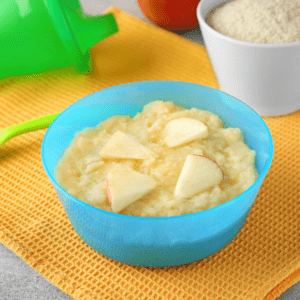
When we think about desserts and puddings, the foods that often come to mind are sugary treats, such as chocolate cake, sticky toffee pudding and ice cream. However, nutritious desserts and puddings, made with cereals, milk and fruit are a great way of providing young children with energy and essential nutrients such as calcium and iron.
- Vary the desserts you offer with lunch and tea each week
- If serving a dessert at lunch time, suitable options could include: fruit-based desserts, such as apple crumble and dairy-based desserts such as rice pudding
- Tea time meals tends to be a lighter, and so you could consider a lighter pudding, including: fruit such as seasonal fruit salad, and/or dairy-based dessert, such as yoghurt
- Fruit contains sugar and can be used to sweeten desserts- avoid artificial sweeteners
- If providing ice cream, choose plain dairy ice cream, as it contains more calcium than non-dairy ice cream (limit offering it to once a week and serve with fruit)
- Instead of ice cream there are lots of cooling desserts you can offer during the warm weather, such as frozen yoghurt bites and homemade fruit lollies
- When baked items such as flapjack and sponge cake, use fruit, fruit puree or fruit juice to sweeten dishes rather than sugar
- If using tinned fruit choose fruit in natural juice and not syrup
- Be cautious of the sugar content in flavoured yoghurts. Opt for natural, Greek or plain yoghurt and add fruit, such as berries, to naturally sweeten. In warmer months, try making your own frozen yoghurt, for a refreshing pudding
- If you are choosing a dessert as your additional dish ensure you still include a vegetable as part of the main dish.
- You can find lots of guidance on preparing your puddings safely for by reading our blog ‘Preparing Food Safely to Reduce the Risk of Choking’ here (opens in new tab).
- Explore more dessert ideas in our blog ‘Child Friendly Recipe Ideas and Cooking Activities’ (opens in new tab).
The Early Years Foundation Stage Nutrition Guidance also outlines the following:

Which Desserts are Suitable for Babies?
Around 10-12 months, lunches and teas can include a main course, and a fruit or dairy based dessert, to move eating patterns closer to those of children over one year, and to ensure meals are sufficiently varied and nutrient dense. However, infants appetites can vary, and they may not always want a pudding.
If offering puddings, good examples include stewed mangos and pears with custard or yoghurt. Avoid providing cakes and biscuits to infants under 12 months and choose a fruit or dairy dessert for infants 10-12 months.
Examples of desserts to offer at lunch which are suitable for 10-12 month old infants
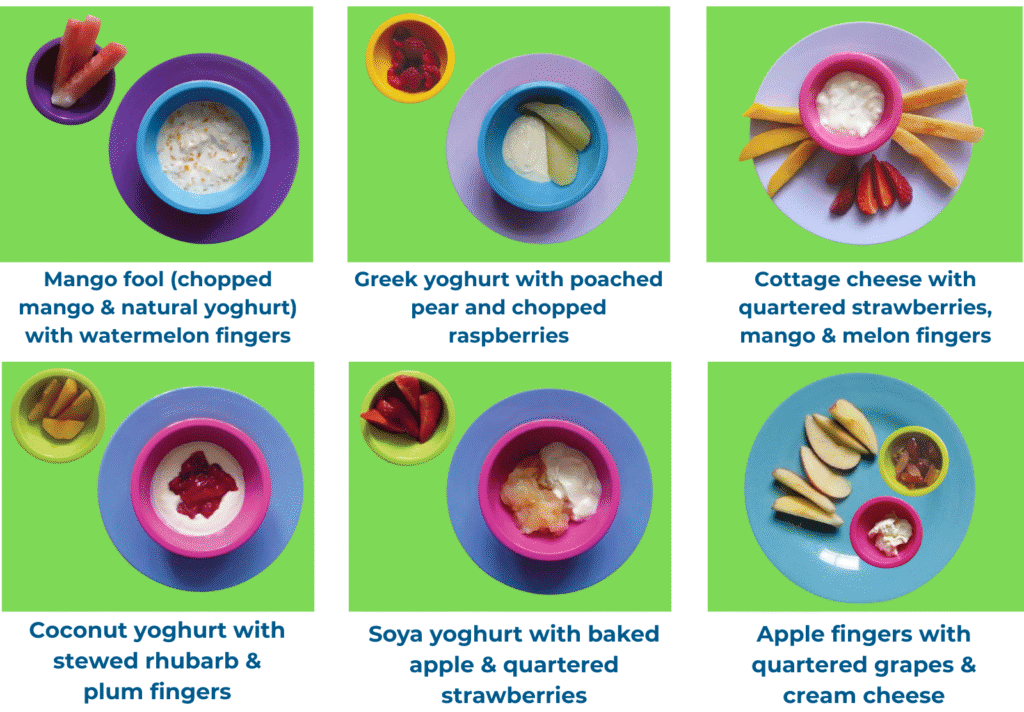
Banana sticks, Yoghurt with melon fingers, seasonal fruit platter (finger foods), creamy apricot dessert, with sliced apricot, seasonal berries.
Examples of desserts to offer at tea which are suitable for 10-12 month old infants
Plain yoghurt with strawberries, slices of cheese and apple, semolina and nectarine slices, sliced grapes and melon slices with cottage cheese dip, plain yoghurt and mango slices.
Which Desserts are Suitable for Toddlers?
There are lots of suitable toddlers desserts / puddings that can be offered which are cereal, fruit or milk based.
For example:
- Fruit crumbles
- Homemade fruity flapjack
- Fresh and tinned fruit
- Fruit salad
- Plain yoghurt with fruit
- Rice Pudding
- Custard (unsweetened)
LUNCH time second dish (dessert/ pudding) examples:

TEA time second dish (dessert/ pudding) examples:
Spring / Summer Pudding Ideas for Lunch
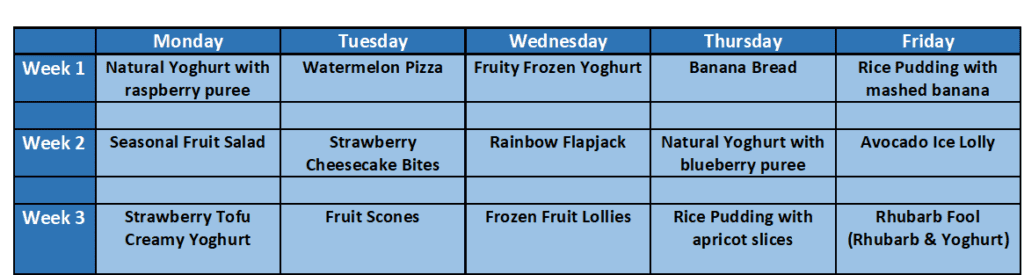
You can find all of our Spring/ Summer pudding recipes in our blog (opens in new tab)
Autumn/ Winter Pudding Ideas for Lunch
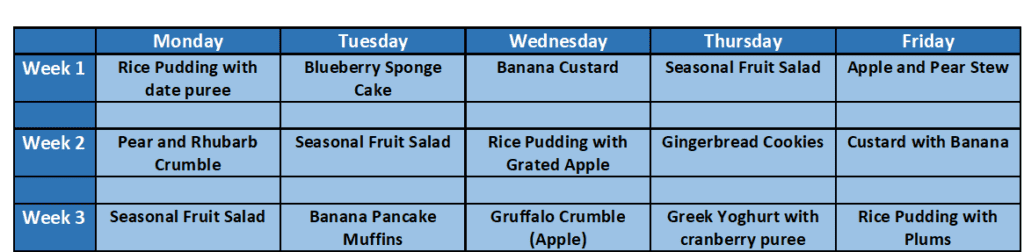 You can find all of our Autumn/Winter pudding recipes in our blog (opens in new tab)
What about Smoothies as Puddings/Desserts?
The Early Years Foundation Stage (EYFS) framework states (opens in new tab) that early years providers must promote good oral health of children who attend their setting. It’s important to limit the amount of free sugars children eat or drink in early years setting (and at home), as well as how often they consume them. This can help to avoid tooth decay.
Free sugars include all sugar added to food and drinks by the manufacturer, cook or consumer. They are found in foods like:
- cakes, biscuits and chocolates
- processed foods – like some jarred sauces, jams and breakfast cereals
- some flavoured yoghurts
They are also found in natural products like:
- honey and syrups
- fruit juices and purees
- smoothies
Free sugars are not found in:
- whole fruit and vegetables
- plain, unflavoured milk and yoghurt
- water
The Early Years Foundation Stage Nutrition Guidance outlines that water and milk are the only safe drinks to give children in regard to their oral health. It outlines that you should avoid sugary drinks (including fruit juices, squash and smoothies).
Should children have dessert if they don’t eat their main course?
As we know, children’s appetites will vary, so they should be encouraged to eat nutritious foods according to their appetite. Children should not be expected to finish everything on their plate, and should be allowed to eat their dessert even if they have not finished their main course, because it’s an important source of energy and nutrients for them. By telling toddlers ‘you can’t have pudding until you’ve finished your main meal’, this makes pudding seem more desirable than the foods offered at main courses.
Forcing a child to finish what is on their plate may interfere with their ability to regulate their appetite and could cause them to experience unnecessary stress and anxiety at mealtimes. If children do not finish their first course, remove the food without making any comment and move on to offering a healthy, nutritious pudding.

Cooking and Learning about Food
There are lots of wonderful, tasty and nutritious desserts that can be offered to toddlers at mealtime and they are also a great opportunity to involve children in cooking activities. It’s a fantastic opportunity for them to learn new skills and explore a range of foods from an early age. We know that developing healthy eating habits and an interest in food, early on, can help promote lifelong positive attitudes and enjoyment of good food and cooking.
Here at Early Start Nutrition we have lots of dessert inspiration on our Early Start YouTube Channel (opens in new tab) and we’ve complied all our favourite recipes in our blog Child Friendly Recipes and Cooking Activities (opens in new tab).

Resources
- Parents can find out more about weaning babies and feeding their toddlers by visiting our parent’s page (opens in new tab).
- If you are an early years setting you can find out about Weaning Babies at Nursery by reading our blog (opens in new tab).
- Public Health England have also produced example menus and useful guidance for early years settings to help meet the Early Years Foundation Stage requirements for food and drink. There are lots of ideas for recipes available on their website (opens in new tab).
- Early years chefs and practitioners can also book on our Menu Planning (opens in new tab) training which will give you the knowledge to plan your puddings to meet the Early Years Foundation Stage Nutrition Guidance.
I find these ideas very interesting
We will implement these ideas in our menu