
Menu Planning FAQ’s and Common Pitfalls
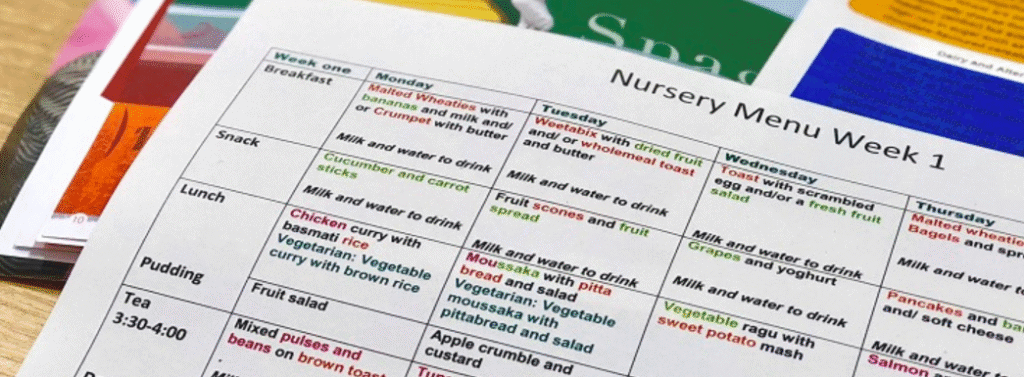
In this blog we look at some of the most common questions around planning menus to meet the Early Years Foundation Stage (EYFS) Nutrition Guidance. Here at Early Start Nutrition we’ve reviewed hundreds of early years menus and complied some of the most common areas of feedback we’ve given to settings. Check out our top tips below to support you to plan healthy, balanced and nutritious meals for children in your setting!

Are there any guidelines that our early years setting should follow when menu planning?
Yes, the Early Years Foundation Stage Nutrition Guidance (opens in new tab). This guidance is for early years providers in England who care for early years children aged 0 to 5 years. Providers must have regard to this nutrition guidance as it’s a safeguarding and welfare requirements of the Early Years Foundation Stage (EYFS) framework.
It supports settings in meeting the EYFS statutory framework requirement that states ‘Where children are provided with meals, snacks and drinks, these MUST be healthy, balanced and nutritious’.

What does a healthy diet look like for young children?
A healthy, balanced and nutritious diet for children aged one to four years should consist of foods from the 4 main food groups. This will provide children with energy and a range of essential nutrients needed to grow and develop.
A key principle of healthy eating is variety! This is because eating a wider range of different foods provides a good balance of nutrients. When menu planning, try to include a variety of food and drinks across meals and snacks, as this will provide children with a good balance of nutrients.
- Between 1 to 2 years of age, toddlers should continue to be offered a diverse range of foods, as this will support them to explore a wide range of tastes and textures.
- Between the ages of 2 and 5 years, children should gradually move towards eating the same foods as the rest of the family, following the recommendations in the Eatwell Guide. We will explore how you can plan meals and snacks to meet these requirements as we progress through the training.
Please Note: The Eatwell Guide does not apply to children under the age of 2 because they have different nutritional needs.

How many meals and snacks should we offer and how should we space them out?
Children should be offered:
Children should be offered 3 meals a day, breakfast, lunch and tea (see example below). They should also be offered 2 healthy snacks a day to provide them with essential energy and nutrients (3rd optional at home depending on their appetite)
- Meals and snacks should be offered at a similar time each day as this helps children establish a routine which helps them to manage their appetite
- Ideally, there should be a 1.5-2 hour gap between each meal and snack time to avoid children going for long periods of time without eating, but to also ensure meals are not too close together
- Meal and snack times should last around 20- 30 minutes. This is enough time for children to eat as much as they need, without feeling rushed or losing interest. Of course, some children may take a little longer than others, so it’s important to recognise their individual needs

What are some of the common menu planning pitfalls?
Having reviewed many nursery menus, we often see the following issues and areas of feedback.
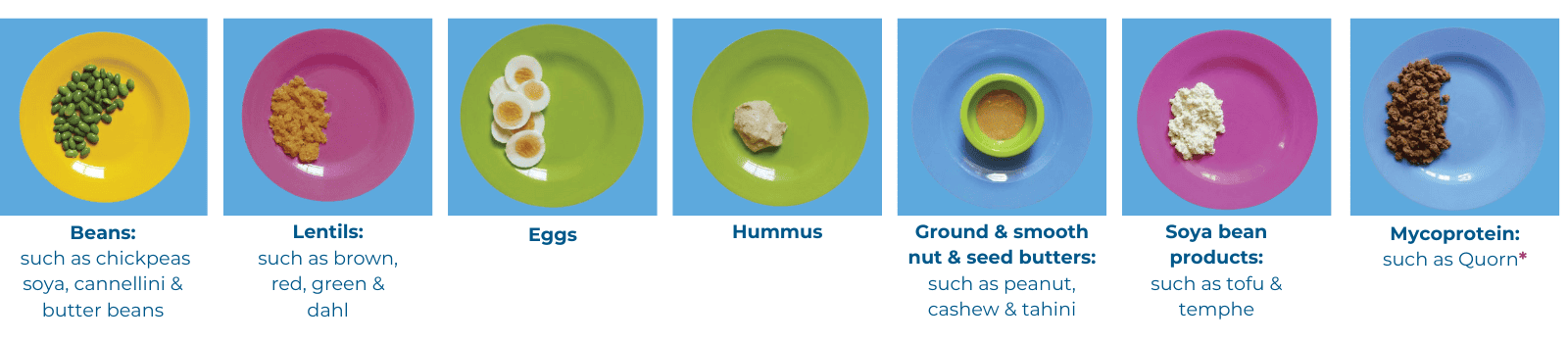
Not including proteins such as beans, pulses, fish, eggs, meat or meat alternatives at lunch and tea
What does the EYFS Nutrition guidance say?
- Provide a portion of protein as part of lunch and tea each day
- Provide a variety of protein sources as part of lunch and tea across the week
Here are some examples of how proteins can be included across meals, including lunch and tea.

Protein foods for vegetarian children are sometimes missing from lunch and tea
What does the EYFS Nutrition guidance say?
- Provide vegetarian and vegan children with a variety of protein sources such as beans, pulses, and meat alternatives each week as part of lunch and tea
- Provide 1 lunch and 1 tea for children each week which uses beans, lentils, pulses or a meat alternative as the protein source
- Limit the provision of products made from meat alternatives (e.g. vegetarian sausages) to once a week as these products can be high in saturated fat and salt
For more information on catering for children who are vegetarian in your setting, check out our blog here (opens in new tab).
Fruit is offered frequently at snack time, but vegetables are not offered as frequently
What does the EYFS Nutrition guidance say?
- Provide at least 1 portion of vegetables and/or fruit as part of each main meal (breakfast, lunch, tea) and as part of some snacks (not including dried fruit)
- Provide a variety of vegetables or fruit across the day and each week
You can find lots more snack examples in our blog Snack Time in your Early Years Setting (opens in new tab).

The same fruits and vegetables are offered across spring/ summer and autumn/ winter menus
What does the EYFS Nutrition guidance say?
- Provide a variety of vegetables or fruit across the day and each week
There are lots of ways you can meet these requirements by choosing food that is grown locally and that is in season where possible. Use a British seasonal food chart (opens in new tab) to help you to identify foods in season
Your setting could even try growing your own! This will help to teach children about where food comes from, about life cycles, about gardening and how to look after plants! Check out our blog Growing and Gardening Activities for Children (opens in new tab)

Dried fruit offered at snack times
What does the EYFS Nutrition guidance say?
- Avoid dried fruit as a snack. It should only be provided as part of a meal
Dried fruits are sticky, meaning they become stuck in the small gaps of the teeth and often stay there for several hours, increasing the risk of tooth decay.
While the EYFS Nutrition Guidance state that dried fruit should be avoided at snacks times, it’s fine to offer a little dried fruit as part of main meals and puddings.
Additional dishes not offered alongside lunch and tea
What does the EYFS Nutrition guidance say?
Each lunch and tea should consist of 2 dishes- a main dish and an additional dish.
Traditionally settings provided a main meal and a pudding (second dish) at lunch and tea, however you now have the option to vary the additional dish that is offered with lunch and tea by choosing one of the following:

Here are our top tips whether choosing a starter, side or second dish.
Starter
Be mindful of children’s appetites when planning your starter- will it fill them up before they’ve had the opportunity to try the main dish? For example, if you’re serving lasagna as the main dish and you offer garlic bread as the starter, children may fill-up on the garlic bread before they’ve had the chance to try the lasagna. We recommend that you offer lighter starter dishes to support children to try a variety of options.
Side Dish
From experience, we’ve found that settings tend to provide children with the opportunity to self-serve at lunch and tea.
You may find that your side already forms part of the main meal, e.g. a bowl of salad or additional vegetable choices.
Second Dish (dessert/pudding)
If you decide to offer a second dish (dessert/ pudding), here are some points to consider:
- Vary the desserts you offer with lunch and tea each week.
- If serving a dessert at lunch time, suitable options could include: fruit-based desserts, such as apple crumble and dairy-based desserts such as rice pudding.
- Tea time meals tends to be a lighter, and so you could consider a lighter pudding, including: fruit such as seasonal fruit salad, and/or dairy-based dessert, such as yoghurt
Explore more dessert ideas in our blog ‘Child Friendly Recipe Ideas and Cooking Activities’ (opens in new tab).
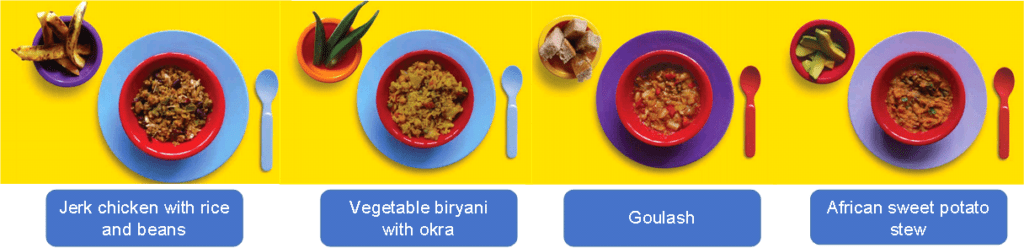
There can be limited food from other cultures
What does the EYFS Nutrition guidance say?
Many early years settings in England have a diverse population, with children attending from different ethnic and religious groups. Even if there are no children from minority ethnic or religious groups attending, it’s still important to introduce all children to a variety of foods. This is so they can learn to appreciate the diets of different cultures.
- It’s important that you cater for the cultural and dietary needs of the children in your care
- Ongoing discussions about the child’s cultural and dietary needs are crucial in creating a safe and inclusive environment for all children to eat
- Incorporating traditional foods from different cultures in your menus can help children feel connected to their cultural heritage
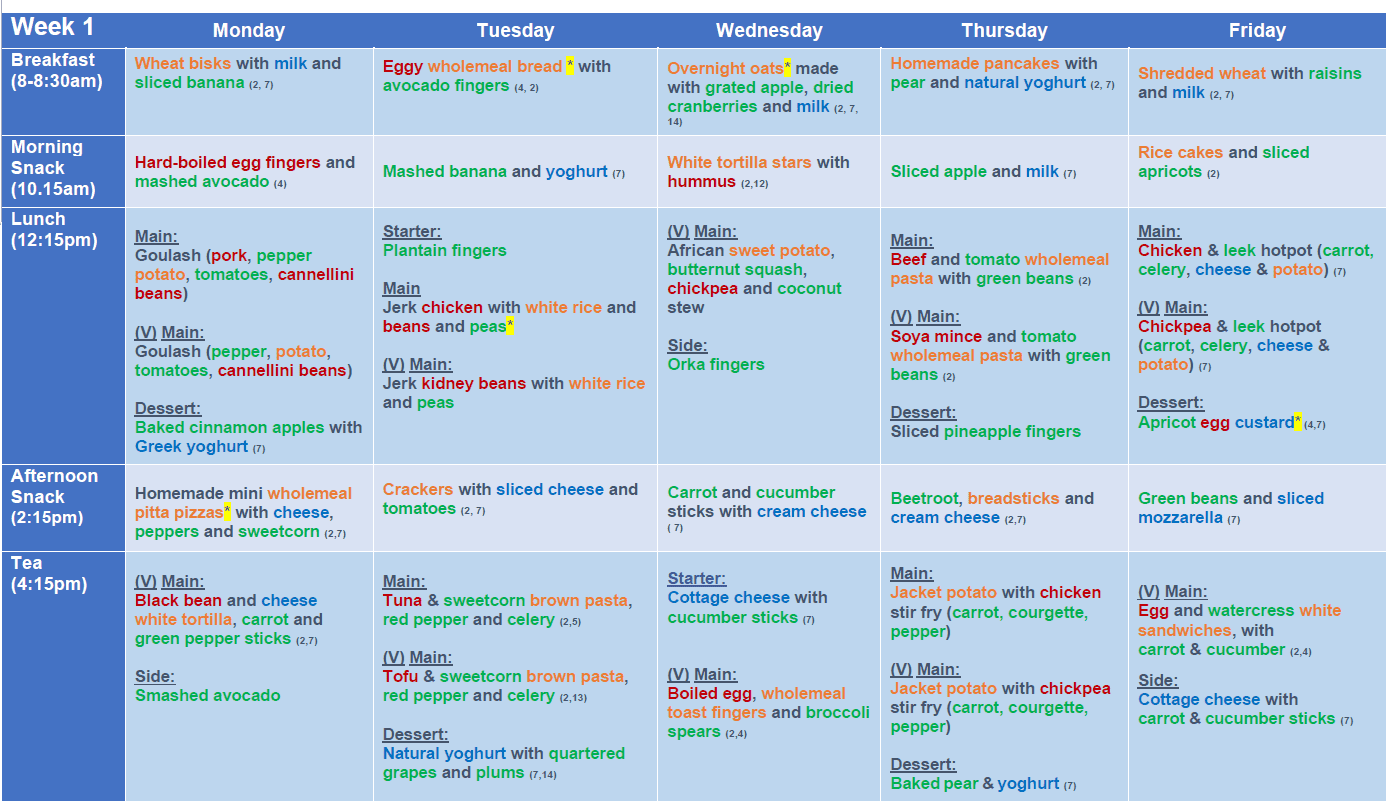
Early Start Nutrition Example Menus:
- Spring/ Summer Menus (PDF, 198KB)
- Autumn/ Winter Menus (PDF, 251KB)
- Vegetarian Menu (Spring/ Summer) (PDF, 1186B)
- Weaning Menu (Autumn/ Winter) (PDF, 507KB)
Looking to review your Nursery menu?
Our expert Registered Nutritionists provide comprehensive reviews to ensure nursery menus meet the Eat Better Start Better voluntary food and drink guidelines.
Training
For more information and tips on planning your menus, check out our online Menu Planning training (opens in new tab), created especially for early years settings-only £36!
- How to produce healthy balanced menus that meet the Eat Better, Start Better food and drink based guidelines.
- How to develop menus that cater for all special dietary requirements (including vegetarian diets, allergies, cultural and religious requirements).
- Ways to support children at mealtimes, considering the dining environment, strategies to manage fussy eating and cooking activities.