
Breakfast in Your Early Years Setting

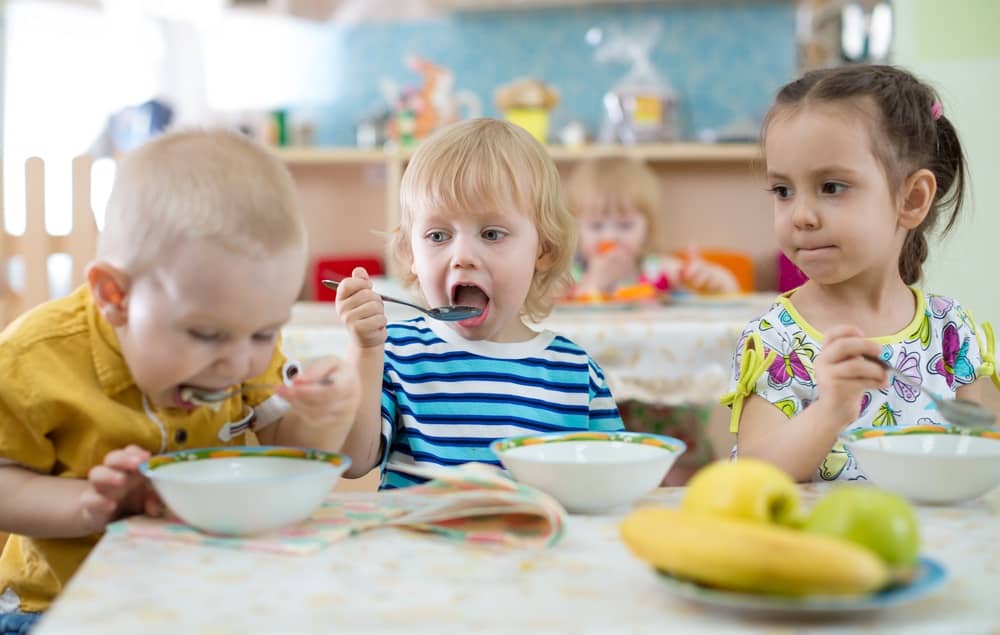
Research shows that eating breakfast in your early years setting has positive effects on children’s concentration, supporting their morning learning, as well providing energy until their next snack or mealtime.
It’s important that your setting views breakfast as equally important as other meals and snacks.
The morning meal plays an important role in providing children with daily nutrients and energy that they require for growth, play, development and learning.
It’s important to speak to parents to find out if their children eat breakfast at home. If not, children should be offered breakfast when they arrive at your setting, to ensure they’re not missing this important meal.
What does the EYFS Nutrition Guidance say?

Here are some of our top tips when providing breakfast in your setting…
Fruits and Vegetables
It’s important to offer a portion of fruit or vegetables at each breakfast time.
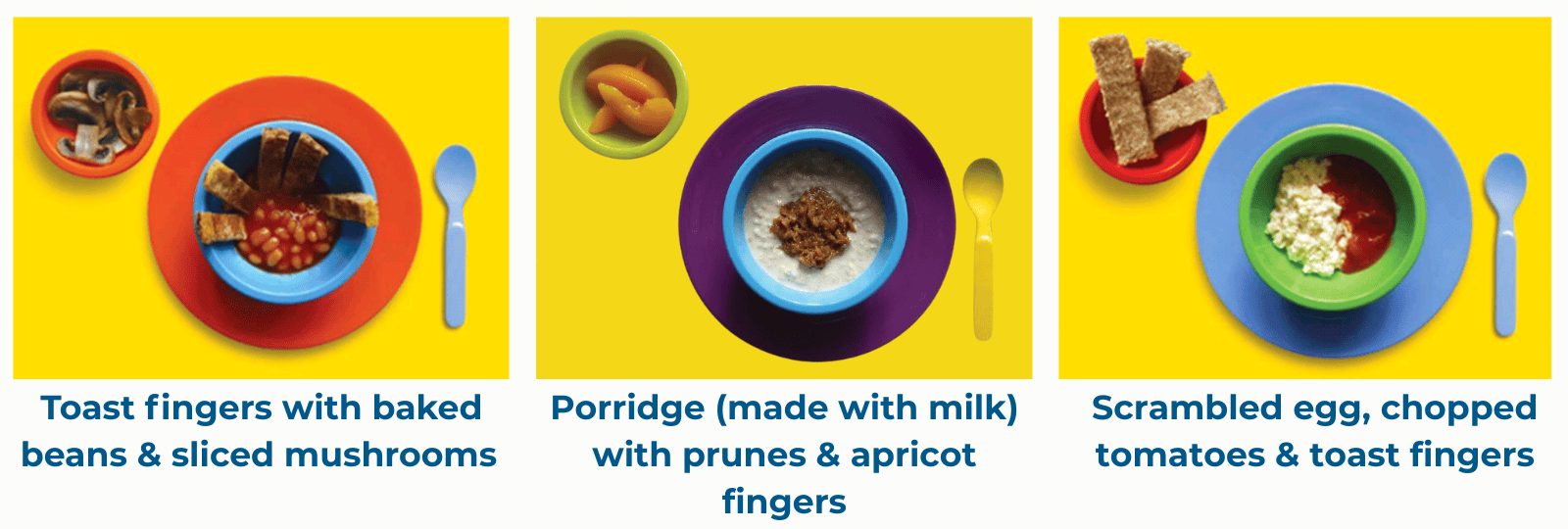
While fruit are often the preferred option, there are lots of ways vegetables can be included too. For example, offer them as a finger food alongside breakfast dishes, such as mushrooms and tomatoes.
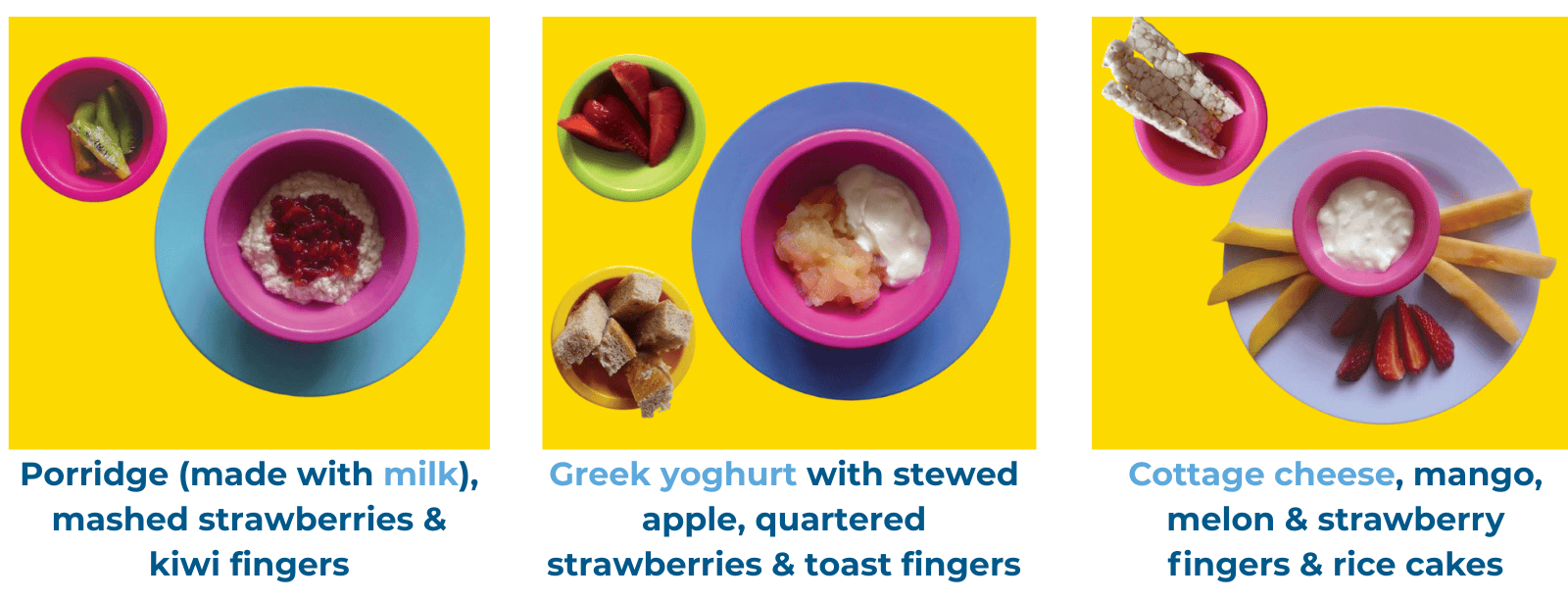
Here are some examples from First Steps Nutrition (PDF, 6.8MB), which are all in-line with the EYFS Nutrition Guidance:
Cereals
Cereals are a great option, so ensure you choose breakfast cereals with a low (green) sugar content.
A low sugar cereal is one that has less than 5g sugar per 100g (always look at the nutrition information per 100g and not per serving).
Low sugar cereals include:
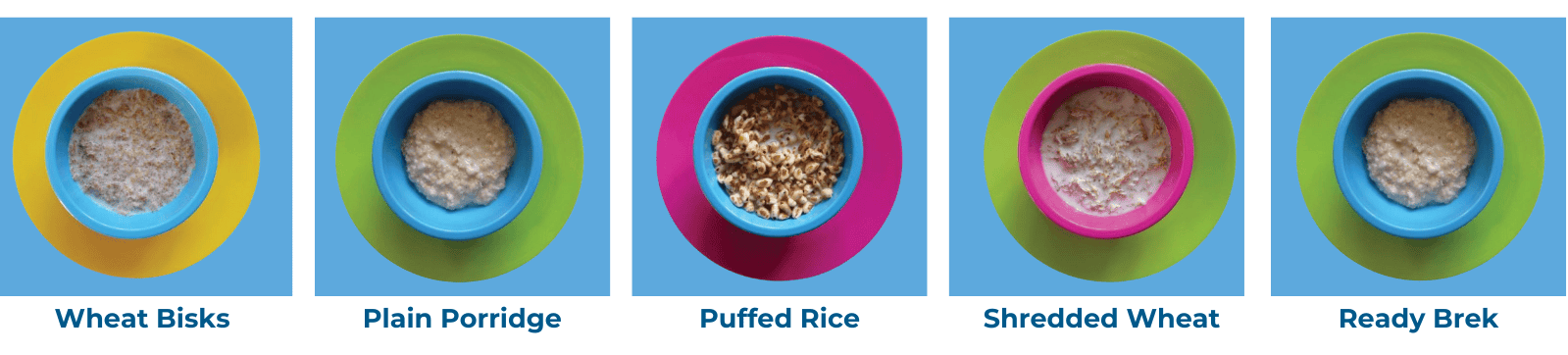
You may occasionally choose those labelled as ‘medium’ (amber) sugar but avoid cereals labelled as ‘high’ (red) sugar, such as sugar coated or chocolate-flavoured cereals.
Label Reading Guide Per 100g

Bread
Choose bread or bread products lower in salt, by looking at the back of the ingredients list and try to offer a variety of white and wholegrain.
Toast is a quick, easy and nutritious option to serve in your setting.
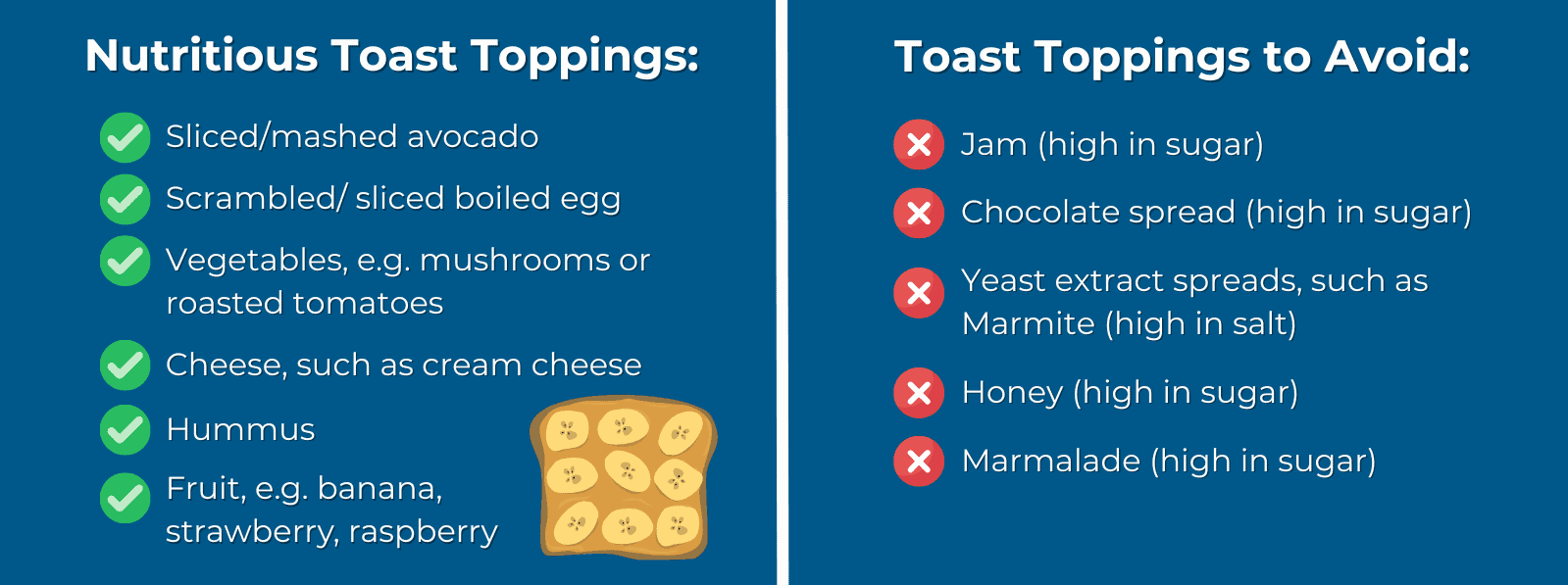
Just be mindful about the toppings that you have available for children. Here are some examples of our favourite toppings (on the left), along with toppings that should be avoided (on the right).
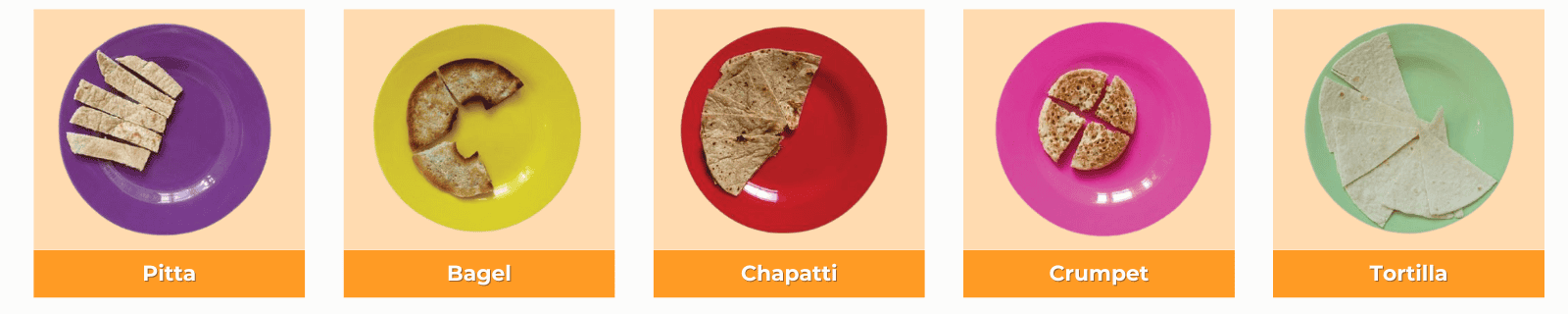
You should also try to vary the bread that you offer.
For example:
NOTE- wholegrains for Under 2’s:
The NHS advises that children can be offered wholegrain foods, such as wholemeal bread, but it’s not a good idea to only give wholegrain starchy foods to under-2s.
Wholegrain foods can be high in fibre and they may fill children up before they have taken in the calories and nutrients they need. After age 2 you can gradually introduce more wholegrain foods.
The EYFS Nutrition Guidance states that you should ‘provide wholegrain starchy foods for at least 1 breakfast, lunch and tea each week‘.
Milk and unsweetened diary foods
The EYFS Nutrition Guidance states that children should be provided with ‘3 portions of milk and unsweetened dairy foods each day’ (which could include breakfast).
For example:
Breakfast cereals can be made with babies or toddlers usual milk:
Infants (0-12 months) Babies usual milk – breast milk or first infant formula can be added to their cereal/porridge. For babies over the age of 6 months breakfast cereals/porridge can be make with full-fat cow’s milk. You can use unsweetened fortified plant-based milk alternatives in your child’s cooking, such as in cereal/porridge from 6 months, but it shouldn’t be offered as a drink until after 1 year of age.
Children over the age of 12 months Breakfast cereals/porridge can be made with whole and semi-skimmed cows’ milk. If children can’t have cows’ milk, they should be offered a suitable unsweetened calcium- fortified milk alternative, for example, soya milk.

Recipes:
- Our Early Start Nutrition blogs:
- Start for Life website (opens in new tab)
- Action on Sugars Breakfast Recipe booklet (PDF, 3.8MB) which also features our popular Breakfast CousCous
Additional resources for best practice at breakfast times
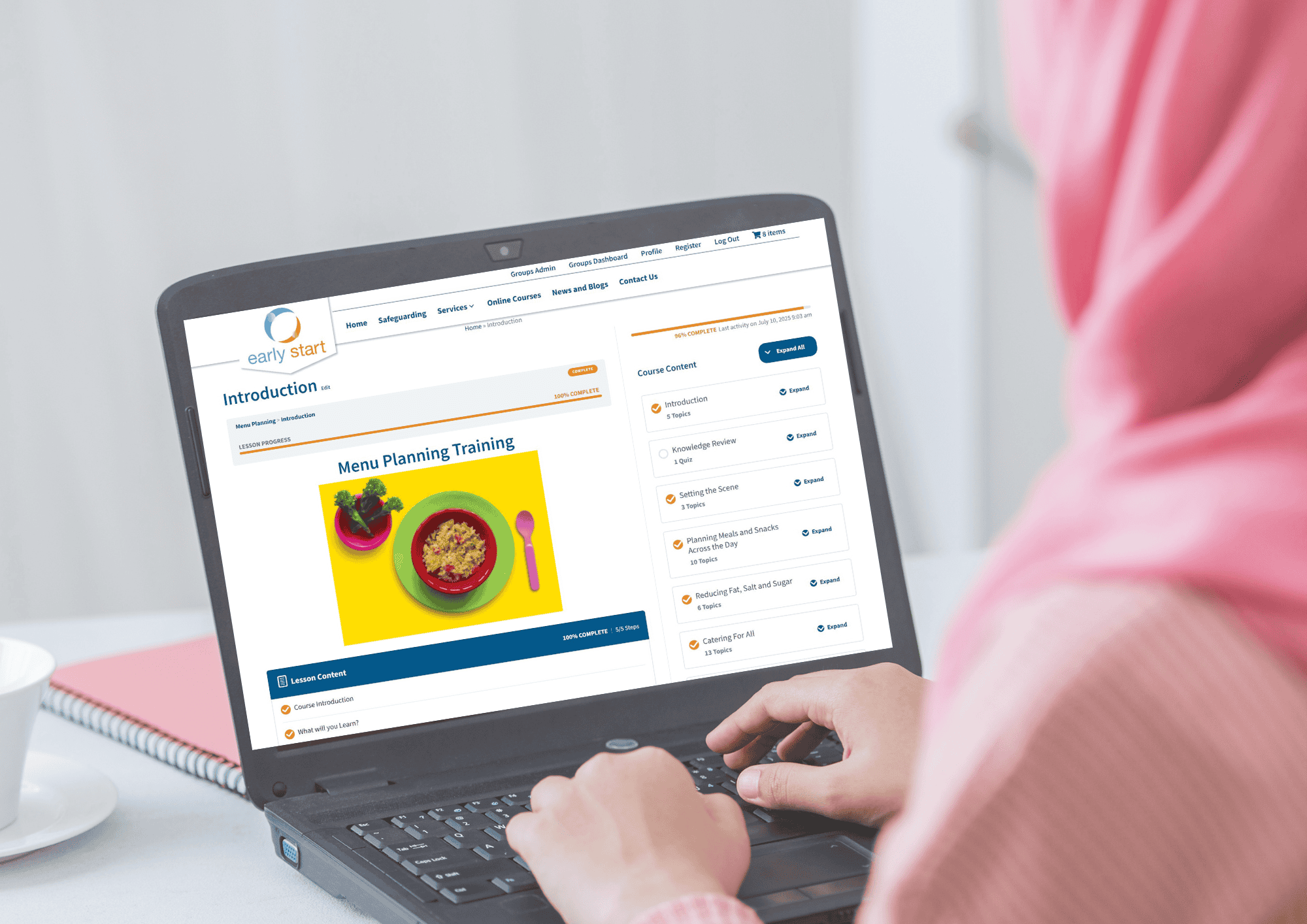
Book our Menu Planning training (opens in new tab) for more information, advice and support in creating menus to meet children’s requirements.